
What made me pursue CAIA was practical. In 2009 I was doing quantitative work at BlackRock and could model risk and returns, but I wanted to understand the strategies behind the non-traditional asset classes I was measuring. Earning the charter shaped the entire arc that followed. At BlackRock I moved from risk analyst to portfolio manager on a $30 billion multi-asset fund, then to the quant macro side at Tudor and later another New York hedge fund. I made the bet on AI in 2019 by joining KPMG’s AI Advisory division, well before it was fashionable. By the time ChatGPT made it a boardroom topic in 2023, I had been building in space for four years.
I recently joined Grant Thornton as Director, based in the firm’s Manhattan office, where I focus on AI for asset managers and hedge funds: helping them make AI a structural advantage rather than a productivity add-on. The CAIA framework still anchors that work, keeping the systems I design grounded in how alternative investment firms manage capital. I’ve also leaned on CAIA’s continuing education resources and events over the years to stay broadly current as space evolves. I sat the CAIA exam in 2009 as an associate at BlackRock, providing risk and quantitative analytics for a large, complex multi-asset book that included a meaningful sleeve of alternatives. I came to it with an engineer’s toolkit and close to zero grounding in markets. I could build the models, but I could not yet read the strategies behind them. CAIA closed that gap, and it has stayed with me since as a north star for how I analyze investment strategies.
The greatest benefit was learning how non-traditional strategies generate return. Once you can read a hedge fund or private equity book the way its managers do, you understand that excess returns come from one of two places, a genuine edge or an illiquidity premium you are paid to hold. In 2009 the firms pressing hardest on the edge were quant pioneers like Goldman Sachs Asset Management or Two Sigma, already using machine learning to find signals others missed. That set the direction for everything since, toward the quant and macro side first and eventually toward AI. I still apply that same lens to AI advisory, judging a model by the alpha edge it creates rather than how advanced it looks.
In the industry, there is a race to embed AI across the investment process, front to back office, and a great deal of AI washing alongside it. A copilot license for every employee is not an AI strategy. If I were an LP today, I would not ask a GP whether they use AI. I would ask how, and to what end. The interesting answer is not a 10 or 20 percent productivity gain per head. It is whether AI lets the firm scale AUM by a real multiple without doubling headcount, and whether the firm’s actual edge is being encoded into a knowledge base it owns. Do that and you get two things at once: a durable advantage, and less key-man risk. What stands out, working across real estate, private equity, hedge funds, and even traditional managers, is how much the use cases rhyme. The asset classes differ. The AI patterns repeat.
To anyone early in their career, and to anyone in the middle of it: AI is here to stay. Stop debating about that and learn to use it to your advantage. The people who compound fastest from here will be the ones who treat it as a tool they are fluent in, not a trend they comment on.
About Jean-Gabriel Prince, CAIA
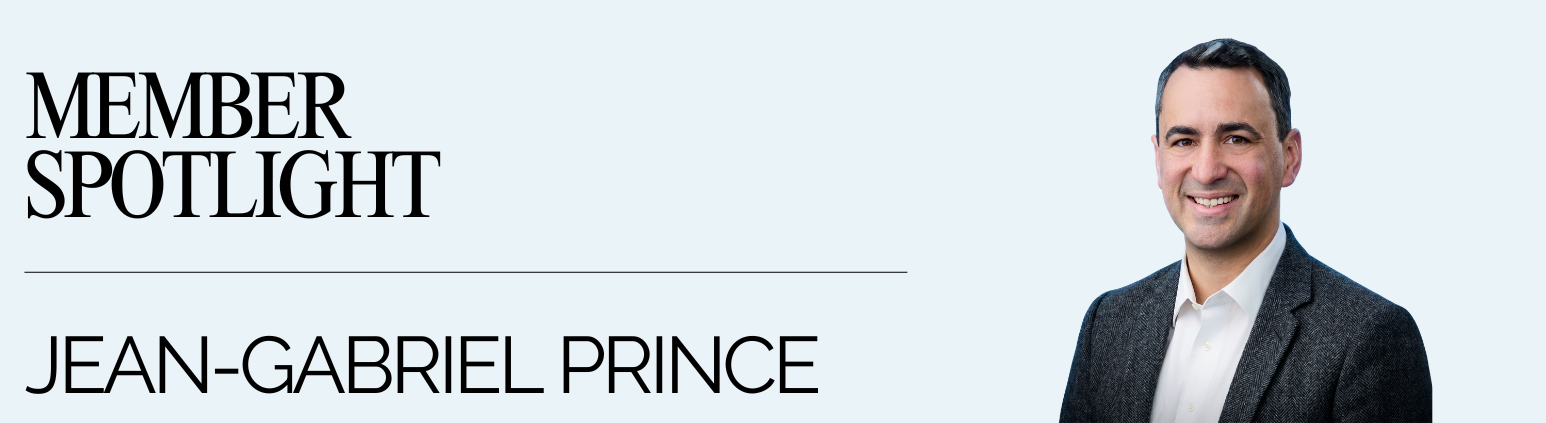
Jean-Gabriel Prince is a Director at Grant Thornton, based in the firm’s Manhattan office, focusing on architecting and deploying AI solutions for asset managers and hedge funds. In 2023, Jean-Gabriel was named top 25 AI Consultant Worldwide by the Consulting Report. He has been a CAIA Member since 2009. Outside of work, he enjoys outdoor adventures around Fairfield County, CT, including hiking, kayaking, and mountain biking.