


By Laura Merlini, CAIA, CIFD, Managing Director, EMEA, CAIA Association
Aesop offers a surprisingly modern lesson for global finance in the fable of The Fox and the Stork. The fox invites the stork to dinner and serves soup in a wide, flat dish. He laps it up easily, while the stork, with her long beak, can hardly taste a drop. Later, the stork returns the invitation and serves the meal in a tall, narrow‑necked jar. She eats her fill; the fox can only sniff the rim and go home hungry. The moral is straightforward: do not play tricks on your neighbours unless you can bear the same treatment yourself.
In our world, the “dish” is the product. Too many global firms invite Middle Eastern investors to their table and serve everything in their own preferred format: structures optimised for home regulators, home tax regimes and home distribution channels. When those products do not quite fit local objectives, governance norms or Islamic‑finance requirements, the implicit expectation is that the region will adapt.
The reality is shifting. Increasingly, regional investors are setting their own tall, narrow‑necked jars: vehicles and structures that reflect local needs, from sukuk and Shariah‑compliant funds to co‑investment platforms aligned with national strategies. Those who refuse to adapt may find themselves, like the fox, politely invited but ultimately going home hungry.
From “barbarian” to fluent
The ancient Greeks famously called outsiders barbaroi, not because they were necessarily uncivilised but because their speech sounded, to Greek ears, like “bar‑bar,” noise instead of language. You were present, but you were not really speaking with them.
When global managers come to the Middle East with exactly the same pitch they use in London or New York, they risk falling into the same trap. If you arrive in Dubai or Riyadh talking only in the language of generic global products and quartile rankings, you may be heard but you are not necessarily understood. You are, in effect, still a barbarian in a market that has its own vocabulary: sukuk and Shariah structuring, sovereign strategies, industrial policy and long‑term nation‑building goals.
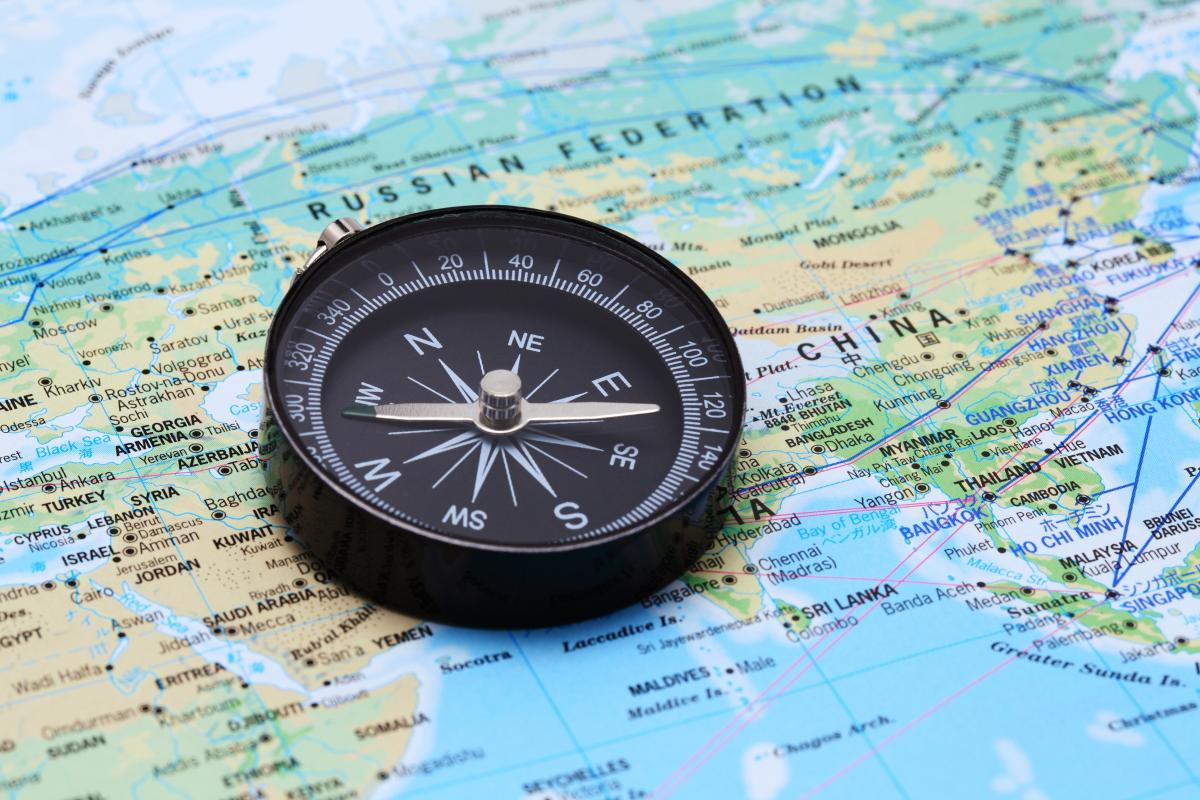
Capital with a compass
For a long time, the Middle East was treated as a funding source rather than a laboratory for how capital could be put to work. Investors flew in, raised money and flew out again. That framing no longer fits the reality on the ground.
Across the Gulf, capital is increasingly deployed with a compass as well as a calculator. Sovereign wealth funds, policy banks and family offices are using private markets, sukuk and hybrid structures to pursue diversification, energy transition, technological leadership and social objectives, all at once.
Nation‑building as an investment lens
Spend time in Riyadh, Abu Dhabi or Doha and you quickly realise that strategies like Saudi Arabia’s Vision 2030 or the UAE’s industrial policies function as live investment roadmaps. Commitments to infrastructure, tourism, entertainment, technology and clean energy all flow from that central vision of a more diversified, knowledge‑based economy
In this context, financial performance is a necessary condition, but not a sufficient one. The most compelling strategies are those that can show both a robust risk‑return profile and a tangible contribution to long‑term development: new skills, new ecosystems, greater resilience in critical sectors.
Sukuk, sustainability and a growing universe
Alongside this strategic agenda, Islamic finance has moved from the margins to the mainstream of the region’s financial architecture. Principles such as risk‑sharing, asset‑backing and a clear link to the real economy resonate strongly in markets that want finance to remain visibly connected to real assets and real activity.
The sukuk market is no longer a niche. Global issuance reached about 265 billion USD in 2025 and is expected to climb toward 270–280 billion USD in 2026, with the GCC alone accounting for roughly 1.1 trillion USD in outstanding sukuk and a growing share of green and sustainability deals. Sukuk are now a core instrument for governments and corporates across the Gulf, increasingly used to finance infrastructure, renewable energy, transport, social projects and other nation‑building priorities, often with explicit sustainability or impact features.
Around this, we see the emergence of Islamic private equity, private credit and venture structures designed to blend entrepreneurial risk with cultural and regulatory alignment.
A call to action
All of this is happening against a more unsettled global backdrop, where geopolitical tensions, conflicts, sanctions and shifting alliances shape supply chains and capital flows. That makes the Gulf’s role as a deliberate, mission‑driven centre of capital even more important (and more demanding).
For investment professionals, the invitation is clear:
- Learn the language of capital
Deepen your understanding of the region’s financial “language,” especially sukuk, Islamic private‑market structures and sovereign strategies. - Co‑design, don’t just export
Show up with products and partnerships that are designed with local institutions, not simply exported to them. - Price geopolitics with discipline
Integrate geopolitical and policy considerations into your investment process with the same discipline you apply to financial analysis.
If your pitch in the Gulf is indistinguishable from your pitch in the City, it may be time to reconsider how prepared you really are to be a credible contributor to the agendas of the region's sovereign wealth funds and public institutions and to place talent, perspectives and capital at the center. Only then can this "rewired world" become an extraordinary opportunity, not just a risk to endure. That is when I will know you have done your homework and that you have walked further than the polished floors of the air-conditioned malls.
This connects to the broader shifts we’re tracking in CAIA's latest report: The World Rewired Report—watch this video for a closer look at the key ideas and how it all came together.
About the Contributor
Laura Merlini, CAIA, CIFD, is Managing Director, EMEA, for the CAIA Association since March 2012. She is a senior alternative investment professional with experience in strategic leadership, management skills and alternative investment knowledge in market outreach, brand development, reputation and member engagement. She formerly worked at Fortis Bank in Milan, Madrid, and Geneva. Since obtaining her CAIA Charter Certification in 2007, she has been an active member-volunteer, not only as the Co-founder of the CAIA Iberia Chapter in Madrid in 2008, but also as the Co-head of the CAIA Switzerland Chapter in Geneva as of 2010. Additionally, she chaired the 100 Women in Finance Educational Committee in Geneva between 2016 and 2018. Laura earned a BA in Business Administration at Bocconi University in Milan, received the CEMS MIM (Community of European Management Schools) MSc in International Management in 2002, and is a member of the Inaugural Class (2014) of the Executive Master in Positive Psychology, Leadership and Strategy from IE in Madrid. She strongly believes that governance is the core of a healthy financial industry, and this conviction led her to become a Certified Investment Fund Director accredited by the CIFD Institute in Ireland in 2015. Laura is also currently a member of the UN PRI HF Advisory Committee and a NED at Agave Advisors, an independent wealth manager firm based in Geneva. She is often invited to speak at conferences, roundtables and webinars on alternative investments. Having earned a Sommelier diploma, in her free time, she enjoys wine tasting as well as opera and art.
Learn more about CAIA Association and how to become part of a professional network that is shaping the future of investing, by visiting https://caia.org/