


By Winston Ma, Esq, CFA, Executive Director of GPIFF and Adjunct Professor at NYC School of Law
Unlike a traditional SWF, such as Middle East sovereign funds that invest their oil money for financial returns, the U.S. Sovereign Wealth Fund under the Trump Administration is not one single fund authorized by the legislature; instead, it’s a strategy driven by the executive power.
As such, the U.S. SWF has no formal, top-down asset allocation plan. That’s why in the months following Trump’s U.S. SWF executive order, the U.S. SWF appeared first as an ad hoc collection of U.S. stakes in business sectors, such as Bitcoin, TikTok, and golden share of Nippon Steel-U.S. Steel merger.
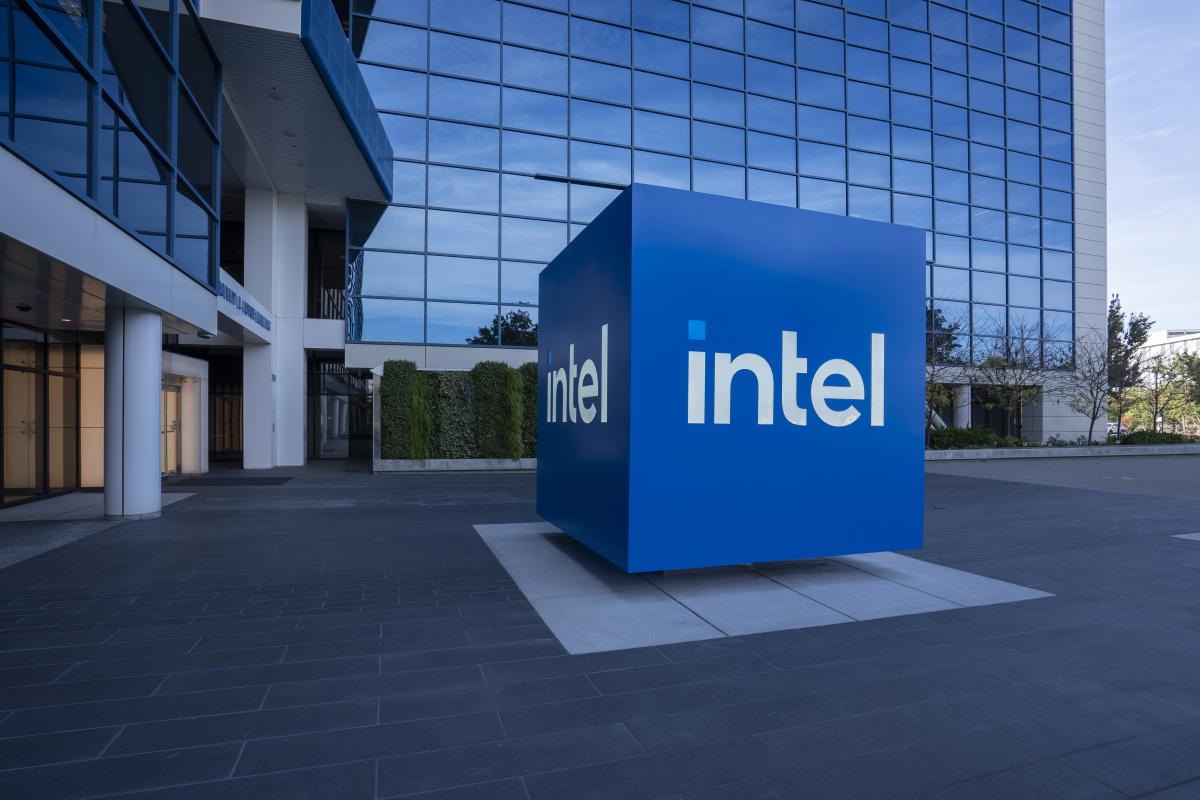
However, as the latest Intel case (and similar U.S. investment in the rare earth company MP Materials) illustrates, the U.S. SWF’s direct, active equity participation in strategic sectors of national security consideration is an increasingly clear and focused strategy.
On August 22, 2025, Intel made an equity-for-grants transaction with the Trump Administration. Intel would receive a total $8.9 billion in awards from the U.S. CHIPS Act and additional programs, which gives the US government a 10% stake in the struggling chipmaker. Weeks later, Nvidia (NVDA) announced it would take a $5 billion stake in Intel (INTC) to co-develop AI data center chips.
By turning the government grants into an equity investment, the Trump Administration establishes a strategic financing in Intel from three critical aspects:
- A market signal that the U.S. is committed to Intel’s long-term prospects. The Trump administration has been seeking ways to increase American market share in semiconductor manufacturing, and Intel is the U.S.’s best chance to compete with Taiwan Semiconductor Manufacturing Co. (TSMC) and Korea’s Samsung in chip fabrication.
Once the king of chipmaking, Intel is in grave trouble. After missing both the smartphone and the ai waves, it is losing out to firms like TSMC and Arm. Now U.S. equity ownership can be viewed as a long-term bet, at a time when Intel is working to regain its manufacturing leadership. - A “poison pill” to dissuade the company from fully exiting the manufacturing segment. TSMC is the dominant player in chip fabrication, especially advanced AI chips, so Wall Street may advise Intel to focus on chip design instead. But Intel pulling out of the manufacturing business would be detrimental to the government’s efforts to shore up domestic chip making for supply-chain stability reasons.
As part of the deal terms, the government has a warrant to buy an additional 5% of Intel shares if the company is no longer majority owner of its foundry business. - A “crowd in” catalyst for public-private partnership. Encouraged by the U.S. participation, Japan’s SoftBank announced its $2 billion investment into Intel for about two percent of the company, followed by Nvidia.
As the White House economic advisor Kevin Hassett said in in a CNBC interview, “the government’s stake in Intel is part of a broader strategy to create a sovereign wealth fund that could include more companies”. The Intel and MP Materials investments exemplify America’s evolving industrial policy implemented by the new U.S. SWF — leveraging state capital both to de-risk strategic projects and to catalyze public-private investment partnerships, for the ultimate goal of “Made in USA”.
Yet, there are sharp limitations to what government investment alone can accomplish. In the grand scheme of things, even the $8.9 billion U.S. funding, plus SoftBank’s $2 billion, is not that much money to fully finance Intel to build up its AI chip manufacturing capacity.
Foundry businesses take many years to build up, as illustrated by the struggles of TSMC’s U.S. facility in recent years. With that as a reference, Intel may need to invest $10bn in each of the next five years if it is to succeed at making leading-edge chips.
Furthermore, Intel’s deeper problems include an outdated business model and a product lineup poorly suited to applications in artificial intelligence. Private capital would only rush in when it’s clear that Intel is competitive again in the AI digital economy.
Intel needs the U.S. help to follow through on its plan to open a new U.S. manufacturing facility in Ohio, which has been repeatedly delayed – not only because of the company’s financial troubles, but also its lack of AI chip manufacturing orders from the biggest customers, such as Nvidia, AMD and Apple.
Therefore, U.S. funding alone wouldn’t address all of Intel’s problems, but the Trump Administration might pressure chip designers like Nvidia, AMD, or Apple to manufacture with Intel, at a time when the U.S. is setting conditions for those companies’ export licenses for China.
In August, Trump negotiated an agreement in which Nvidia and AMD could resume selling AI chips to Chinese companies. In exchange, the U.S. government will take a 15 percent cut of sales. Thus, it’s important not to view the Intel investment as an isolated transaction. All the dealings with these companies are part of the Trump Administration’s remaking of the semiconductor chip sector.
Overall, it’s unlikely that the U.S. investment will make Intel great again soon, but more deals are certainly expected for the U.S. SWF, especially for U.S. semiconductor companies that are regular recipients of subsidies or grants from the U.S.. And more industrial sectors would be involved, according to the remarks by Trump and his team.
Such active, strategic positions may become a major part of the U.S. SWF’s asset portfolio going forward – when they are combined, the U.S. industries (like the chip sector) will be profoundly transformed, and the capital market investors must – willingly or unwillingly – co-invest with the U.S. in this new paradigm.
This is part two of Winston Ma’s Trump US SWF series. Read the first part here.
About the Contributor
Winston Ma, CFA and Esq. is the Executive Director of Global Public Investment Funds Forum and Adjunct Professor of NYU School of Law, and he is the author of The Hunt for Unicorns : How Sovereign Funds Are Reshaping Investment in the Digital Economy. Most recently for 10 years, he was Managing Director and Head of North America Office for China Investment Corporation (CIC), China’s sovereign wealth fund. Prior to that, Mr. Ma served as the deputy head of equity capital markets at Barclays Capital, a vice president at J.P. Morgan investment banking, and a corporate lawyer at Davis Polk & Wardwell LLP. In 2022-2024, he was the board chairman of Nasdaq-listed MCAA, which announced its merger with the digital media unit of FCB (Football Club Barcelona) in August 2023.
Learn more about CAIA Association and how to become part of a professional network that is shaping the future of investing, by visiting https://caia.org/