

By Aaron Filbeck, CAIA, CFA, CFP®, CIPM, FDP, Managing Director, Content & Community Strategy, CAIA Association
Something has felt different over the past few years.
Maybe you noticed it sitting in an investment committee meeting or reading through a manager update. Or maybe just in the way conversations inside your own firm have quietly started to change.
It’s hard to ignore the thought that maybe this time really is different. A dangerous phrase in investing, of course, but sometimes it turns out to be true.
And I’m not just talking about interest rates, inflation, or even the pace of technological change. Those are important, but the feeling goes deeper than that. There’s something different about how the entire system works.
The tricky thing about a feeling like this is that it’s easy to dismiss. After all, we’re supposed to be data-driven people. But your ears start to perk up when you realize others are expressing different versions of the same intuition.
“Markets don’t feel normal.”
“The world feels like it’s moving so fast.”
“My organization feels like it’s falling behind.”
These comments started showing up in conversations across our network in different contexts and from different corners of the industry. At CAIA, what may have once seemed like isolated anecdotes began to look more like a pattern. Which led us to ask ourselves: how do these experiences connect? And are we all seeing the same underlying shifts?
So, we went to the source, our global investment community. The goal was simple: listen, compare notes, and try to make sense of what so many people seemed to be feeling.
What followed were conversations across eight cities, with more than 100 industry leaders around the table, along with input from thousands of CAIA Members. Across those conversations, a set of common themes and signals began to emerge.
Embracing the Future of our Industry
What we heard covered everything from the democratization of private markets, the rise of AI, deglobalization, and the ongoing blur between public and private investing. Individually, none of these are new conversations, but together, they carry significant implications for all of us.
Rather than living in isolation, these signals amplified one another across the entire system we call the capital markets. Geopolitics wasn’t just a backdrop for investment decision-making, but rather a forefront consideration, bolstered by AI innovation, with impacts on teams and talent, and so on.
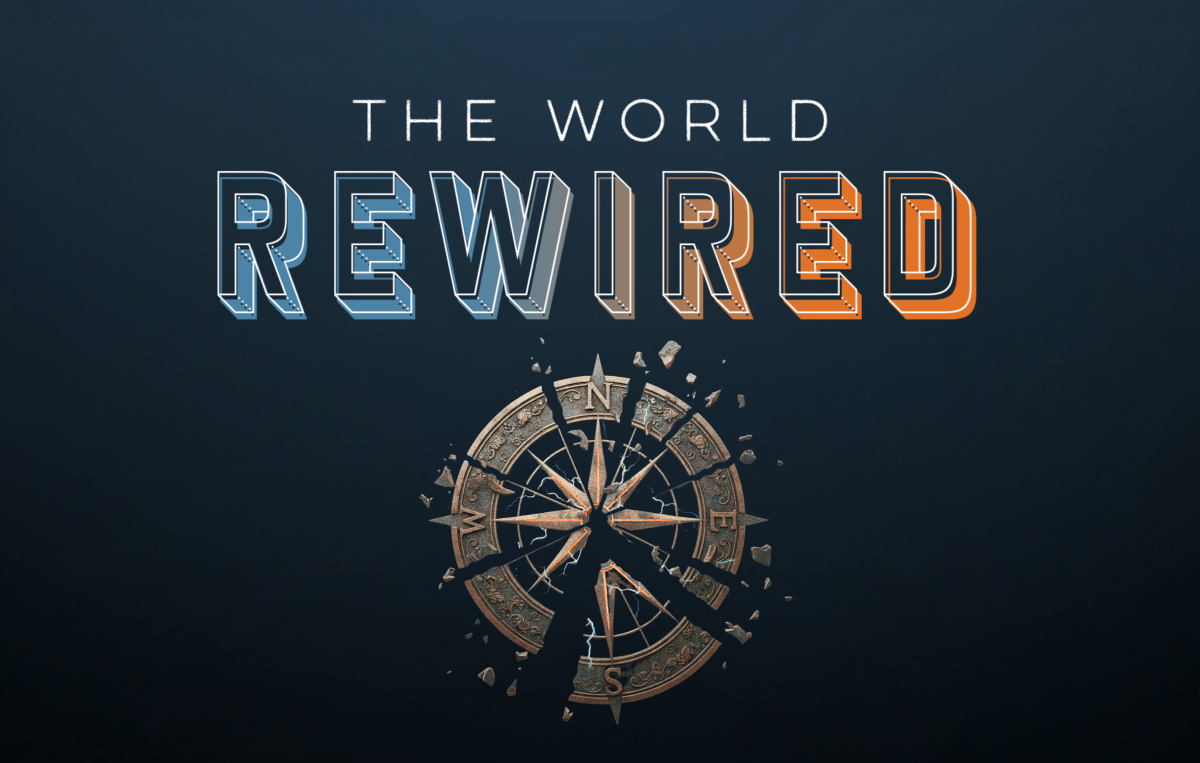
What came from all of this were three interdependent shifts introduced in CAIA’s latest report: The World Rewired. From Signal to Shifts: The Decade Ahead for Capital Markets. Three concentric circles that together look less like a new market cycle and more like shuffling players on the map. Macro shifts in how geopolitics and new centers of capital are reorganizing flows. Industry shifts in how public and private markets are converging and how product design is being reinvented. Organizational shifts in how firms rethink what they require of their people and how they recruit them, change their culture, and update their operating models.
Macro Shifts
The map of private capital is being redrawn. For most of the last four decades, the industry operated with a few comfortable assumptions in the background: steady globalization, relatively predictable regulatory regimes, and a kind of gravitational pull toward U.S. markets as the default center of everything. Those assumptions are under serious pressure right now.
Deglobalization is the obvious part. Regional trade blocs are tightening. Industrial policy has become a legitimate force in shaping where capital can go and what it can do when it gets there. Geopolitical risk, which used to feel like a footnote consideration in due diligence, has moved firmly into the underwriting process.
New centers of capital: the Gulf, China and broader Asia Pacific, and Latin America are building parallel ecosystems, and those ecosystems will produce different kinds of professionals and investors with different instincts and preferences.
Capital isn’t just flowing from the same sources anymore, and it’s not flowing to the same places either. The managers who adapt quickly will access new pools of capital and differentiated deal flow. The ones who assume the old hub-and-spoke model still works are going to find themselves on the wrong side of that shift.
Industry Shifts
For the past several years, the conversation in product innovation has centered on semi-liquid structures: interval funds, tender-offer funds, non-traded REITs, BDCs. The idea was to fill the gap between “lock up your money for a decade” and “invest in a daily liquid fund,” – in other words, have your cake and eat it too. Assets in these vehicles have nearly doubled over a few years, reaching roughly $500 billion in 2025, driven by the increase in adoption amongst the wealth management channels as individual investors wormed their way into private markets for the first time.
But at our roundtables, we kept running into a different conversation happening quietly alongside that one. While a lot of the room was still working through the operational mechanics of semi-liquid structures (e.g., redemption queues, valuation policies, how to actually run one of these things at scale without it blowing up), a smaller subset of participants had already mentally moved on. They were talking about tokenization and blockchain-based infrastructure as a potentially better solution. In other words, many of these leaders and our members are moving from “how do we build a better wrapper?” but “what happens if the plumbing underneath the whole system changes?”
Organizational Shifts
The organizational shift is the one I find myself thinking about most, maybe because it’s the most human. Exogenous events are one thing, but the internal conversation about whether your organization is actually built for what’s coming is more uncertain and difficult to navigate.
Most organizations believe they need to change, but fewer are confident they’re actually able to do it. The cultural conversation ran in parallel with a talent conversation that came up in almost every session. AI and automation are changing entry-level roles faster than development programs can adjust, and technological integration requires cross-disciplinary skillsets. Importantly, senior leaders were asking some version of the same question: if we automate the work that used to train junior analysts, how do we build the next generation of investors?
The answer that emerged isn’t just “reskill everyone in AI.” Rather, many leaders were focused on finding talent with technical expertise paired with geopolitical awareness, systems-level thinking, the ability to negotiate across cultures and disciplines, and judgment that can function under uncertainty. The investment professionals who are going to matter in 2035 aren’t the ones who know the most, they’re the ones who can figure out what they need to know and then actually apply it.
Now What?
The World Rewired report is not meant to be prescriptive. The shifts we identify do not resolve into a clean list of actions. Instead, the report captures a moment in time, a set of forces already in motion that are likely to reinforce one another and reshape our industry, whether we are ready for them or not.
Throughout 2025, we spent time with our members and many of the most senior leaders across the investment profession, listening as they tried to articulate where the pressure in the system is coming from. What exists in the pages of the report is our attempt to make sense of those conversations and to surface the signals that may shape where our industry goes next.
Next is here.
About the Contributor
Aaron Filbeck, CAIA, CFA, CFP®, CIPM, FDP is Managing Director, Content & Community Strategy at CAIA Association. His industry experience lies in private wealth management, where he was responsible for asset allocation, portfolio construction, and manager research efforts for high-net-worth individuals. He earned a BS with distinction in finance and a master of finance from Pennsylvania State University.
Learn more about CAIA Association and how to become part of a professional network that is shaping the future of investing, by visiting https://caia.org/.