


By William J. Kelly, CAIA, Founder & Managing Member, Educational Alpha LLC
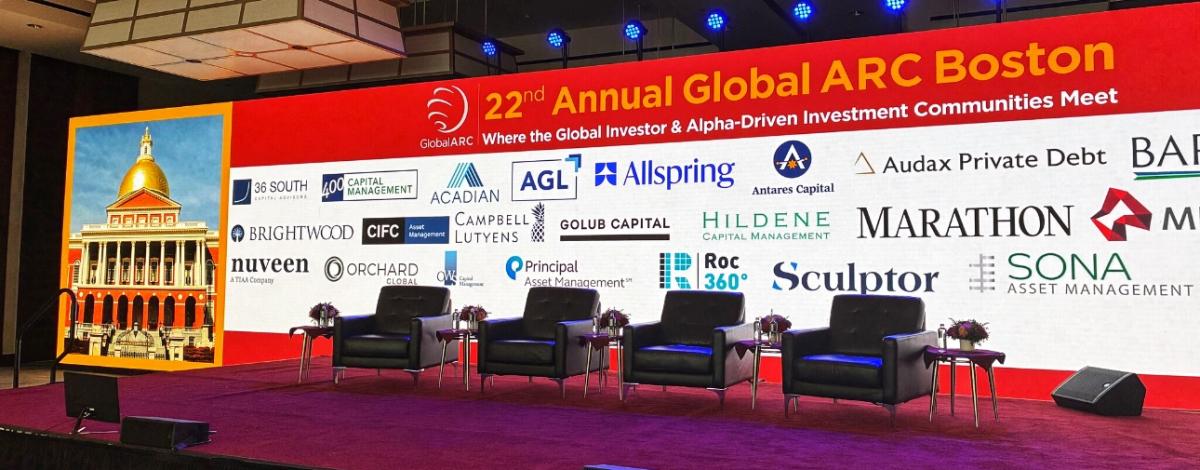
I recently attended the Global Absolute Return Congress (Global ARC) and was so happy to see that there was at least one forum left in this world where Private Credit yielded some stage time to other interesting and perhaps more emerging topics. This act of genius brought the GENIUS Act and the world of stablecoins to the delegates via an interesting interchange between Michael Rosen (a Global ARC omnipresent moderator) and Professor Andrew Metrick from the Yale School of Management. It got me thinking more about the future implications of the world of DeFi and why we needed a GENIUS Act in the first place, and even more basic, just what might be the future use case for the stablecoin. Following are just four basic questions which I attempt to ask and answer, as I too seek to learn, and to contemplate a future that might be vastly different than the past.
- What are stablecoins? Stablecoins are a form of a digital token that are (in theory) pegged to and collateralized by an underlying asset, usually in the form of a fiat currency. The underlying peg can really be tied to just about anything but there are generally considered to be two, three, or even four broad categories of stablecoins, depending upon who you listen to or what you read. The two-species view is nicely summarized by the stable geniuses at JP Morgan, but a more precise derivative definition gets us up to those four categories. You should note that a coin is a coin, but it is the collateral that drives price (which can be anything but stable) and the underlying volatility:
- Fiat-backed stablecoins: Pegged to, and fully collateralized by, a fiat currency such as USD. While the least risky of the four, good old-fashioned runs on the bank can expose duration mismatching with the underlying collateral. While more wholesomely in the fourth category below, this was part of the story behind the Terra/LUNA debacle but the fiat-backed coin is really just the digital version of George Bailey’s Building and Loan.
- Commodity-backed stablecoins: The $1.4B market cap PAXG is a perfect example, where the underlying is fully collateralized by a physical commodity (in this case gold), and the price will be highly correlated to the movement of the underlying collateral.
- Crypto-backed stablecoins: DAI, the $5B market cap stablecoin, is a good example. While “stabilized” at $1 it is over-collateralized (up to 175%) by a range of assets including the much more volatile Ethereum.
- Algorithmic-backed stablecoins: The most technical of the four categories and when seigniorage is in play, this boomer’s head starts to hurt and I run back to Terra-firma!
- What is the market cap of fiat-backed stablecoins (the first category above) and its primary use case? The total market cap is approaching $300B and the category is dominated by just two coins: Tether/USDT ($183B) and Circle/USDC ($76B). The former has over five hundred million users today (6% of the global population), and it is the only way to transact for many who are un-banked and/or living in high inflation countries.
- What is the GENIUS Act and what is it purporting to accomplish? The GENIUS Act was signed into law in July of this year, and while you might think it is all about making a couple of otherwise dopey First-sons insanely rich or the reason behind the pardoning of a convicted money launderer, it is more nuanced than that. In fact, it is a critical first step in defining and regulating what is likely the future of commerce as explained here by State Street. It is an important first frame-working step but some significant (systemic?) risks remain unanswered such as (a) basic consumer protection, (b) the implications for mortgage lending and broader credit intermediation, (c) the opportunity for regulatory arbitrage, (d) the implications on the US Treasury market, and finally for the more wonky amongst us, (e) the potential impact when permissible stablecoin reserves (under the Act) include Treasury repos and reverse repo transactions, especially at a time when the Fed might be shutting down the QT program as soon as this coming week.
- What does this mean to the average human on the streets of Boston, Toronto, or London? Today, likely very little, but if you are over the age of 50, try to think back to a time when you survived and thrived without the internet or a smartphone… then remind yourself you did exactly that for about half of the time you have been alive! In the tomorrow of technology, everyday purchases from 100 shares of APPL to toilet paper via Amazon Prime will be on the blockchain, and the coin of realm will most certainly be a stablecoin. In 2010 the iPhone was still very new and APPL introduced the iPad for the very first time. Absent any inflation adjusted qualifiers, the market cap of that stock was just about $300B back then, or just about where we find the market cap for fiat-backed stablecoins today. Fun fact or a harbinger for a future where the aforementioned goods might be largely purchased with this digital currency?
Genius fails when we fail to Act or to at least understand what lies beneath the surface. You do not need to be an expert on many things in life, but ignorance can be bliss, until we are near that digital hour between dog and wolf.
Seek education, diversity of both your portfolio and people, and know your risk tolerance. Investing is for the long term.
About the Contributor
William (Bill) J. Kelly, CAIA is the Founder and Managing Member of Educational Alpha, LLC where he writes, podcasts, and speaks on a variety of investment related topics, focused on investor education, transparency, and democratized access to differentiated risk premia. Previously he was CEO of CAIA Association since taking this leadership role in 2014 until his retirement in 2024. Prior to that, Bill was the CEO of Boston Partners, and CFO and COO of The Boston Company Asset Management, a predecessor institutional asset manager. In addition to his current role, Bill is also the Chairman and lead independent director for the Boston Partners Trust Company and serves as an independent director for the Artisan Partners Funds, where he is also Chair of Audit Committee and a designated Audit Committee Financial Expert. He is also currently an Advisory Board Member of the Certified Investment Fund Director Institute within the IOB (Dublin) which strives to bring the highest levels of professionalism and governance to independent fund directors around the world. Bill began his career as an accountant with PwC where he earned his CPA (inactive).
Learn more about CAIA Association and how to become part of a professional network that is shaping the future of investing, by visiting https://caia.org/