


By William J. Kelly, CAIA, Founder & Managing Member, Educational Alpha LLC
“Private equity employees used to aspire to own their own jets, but now they just want to afford their children’s private school tuition, he said”…
Did “HE” just say the quiet part out loud, and is that what we truly have become?
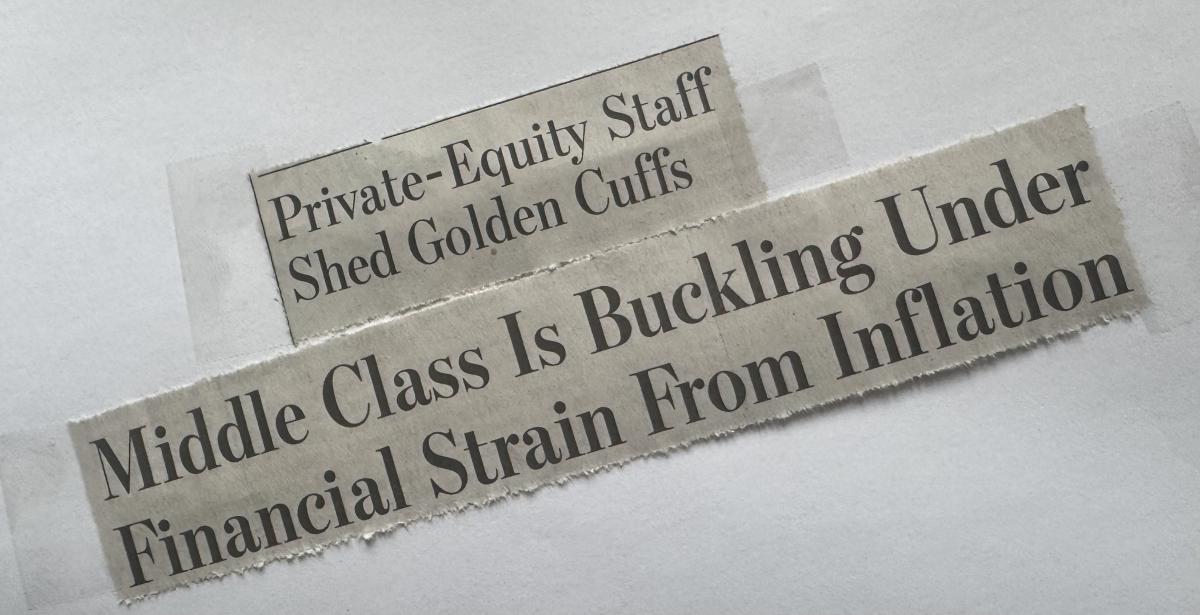
This quote appeared in “Private Equity Staff Shed Golden Cuffs” on B1 of the November 21, 2025 issue of the Wall Street Journal. In fairness to the reporter, the editorial staff at the WSJ never seems to have allowed for emojis like 🙄,🤮, or 💩, but that statement should not have been left unchecked. After four and a half decades in this industry very little surprises me and this adult version of the lax-bro is certainly a prototype that I have seen before.
Private capital investing as a business model dates back to the 1940’s when ARD was one of the earliest GP’s to raise and invest outside capital. For many decades this was the domain of the sophisticated institutional investor and their general partners, as they all took on the aura of Mr. Monopoly. Heady times for sure, but the business dealings seemed (mostly?) honest, and everyone seemed to benefit, especially the investors who chose this newer and more patient vertical in which to invest their capital. To steal a line from Fisher Investments, “we do well when our clients do well” requires no apology nor explanation, for what is truly our fiduciary duty.
There is a scene in the movie Godfather where the character Kay Adams says to Michael Corleone, “do you know how naïve you sound; presidents and senators don’t have men killed,’’ to which Michael responds, “who is being naïve Kay?”. Maybe I was a bit naïve when this movie was released in 1972 but certainly not anymore. It is through that metaphor that I understand the business I have chosen, and I have seen and know the sharpest edges within financial services. There is nothing naïve about my outrage here, but maybe we should continue to pick on someone our own size, such as the more sophisticated and resourced institutional investor. Afterall, they know and understand all the risks and even the unsaid rules of engagement.
Let us now dial back the lament of the anonymous and aggrieved party in the WSJ article. His vale of tears centers around his share of the carry that will likely never materialize. Before any profit would be specially allocated to him, it first belonged to the client who entrusted their assets to him hoping for a fair return, in balance with the risks he chose to underwrite. If done well, the GP and LP both win, and the market-clearing price for that has been well established at around a 20% allocation of this largess going to the gifted GP. When he moans about getting zero, it should not be forgotten that the LP now owns 100% of his loss, and the LP has obligations that also need to be met too. It is unlikely that their list of foregone opportunities included a renewal of a NetJets Membership for the beneficiaries they in turn serve.
And now comes the individual investor. Of the many things stacked against him or her, it is this mindset that troubles me the most. Where the LP/GP relationship has the likes of the Abu Dhabi Investment Authority or Harvard Management on the other side of the table, accountability and responsibility will always (literally) be in the room. When the smaller ticket sizes of the individual investor are pooled into a formidably sized fund, there is no LPAC, no convening power, and certainly less client specific accountability. I am not suggesting that every GP does not care about these things, but the democratized model cannot possibly give these institutional investor norms the attention they deserve, absent the highest degrees of fiduciary intentionality.
Before I close, it is both ironic and prescient that this same edition of the WSJ had another headline that caught my attention, this time on A1 just below the fold: “Middle Class Is Buckling Under Financial Strain From Inflation”. While the lax bro is now suffering in the first class cabin of a commercial jet, real people are having difficulty managing a $150 monthly increase in their rent and opting for the likes of Wingstop for dinner, where I doubt they have a reserve whine list (pun intended!).
A capitalist should never feel the responsibility to say they are sorry as long as they remain responsible for actions, words, and most importantly, the sacred trust they take on when someone else’s capital has been entrusted to them. I feel so very fortunate to have spent the entirety of my career in financial services and have always tried to stay humble. I never played lacrosse, attended an Ivy League school, nor had a private jet membership, but this industry has been very good to me. It is the juxtaposition of articles like this that should have every one of us asking, have I been equally good to the clients I serve, and the broader community in which I live?
Happy Thanksgiving and give thanks by at least being humble. If we cannot democratize that, we have no business nor credibility in coming for the individuals’ assets.
Seek education, diversity of both your portfolio and people, and know your risk tolerance. Investing is for the long term.
About the Contributor
William (Bill) J. Kelly, CAIA is the Founder and Managing Member of Educational Alpha, LLC where he writes, podcasts, and speaks on a variety of investment related topics, focused on investor education, transparency, and democratized access to differentiated risk premia. Previously he was CEO of CAIA Association since taking this leadership role in 2014 until his retirement in 2024. Prior to that, Bill was the CEO of Boston Partners, and CFO and COO of The Boston Company Asset Management, a predecessor institutional asset manager. In addition to his current role, Bill is also the Chairman and lead independent director for the Boston Partners Trust Company and serves as an independent director for the Artisan Partners Funds, where he is also Chair of Audit Committee and a designated Audit Committee Financial Expert. He is also currently an Advisory Board Member of the Certified Investment Fund Director Institute within the IOB (Dublin) which strives to bring the highest levels of professionalism and governance to independent fund directors around the world. Bill began his career as an accountant with PwC where he earned his CPA (inactive).
Learn more about CAIA Association and how to become part of a professional network that is shaping the future of investing, by visiting https://caia.org/