


About the CAIA Curriculum
The global investment landscape has undergone a profound transformation since the inception of the CAIA Charter Program. And with it, a redefining of the very nature of institutional investing and reshaping the role of alternative investments within portfolio construction. As a professional body dedicated to creating greater alignment, transparency, and knowledge for all investors, the CAIA Association has incorporated this evolution within the CAIA curriculum. Guiding this process is the Global Curriculum Committee, a selected group of investment practitioners with deep expertise in alternative investments that informs each annual curriculum update to reflect what truly matters in today’s investment environment.

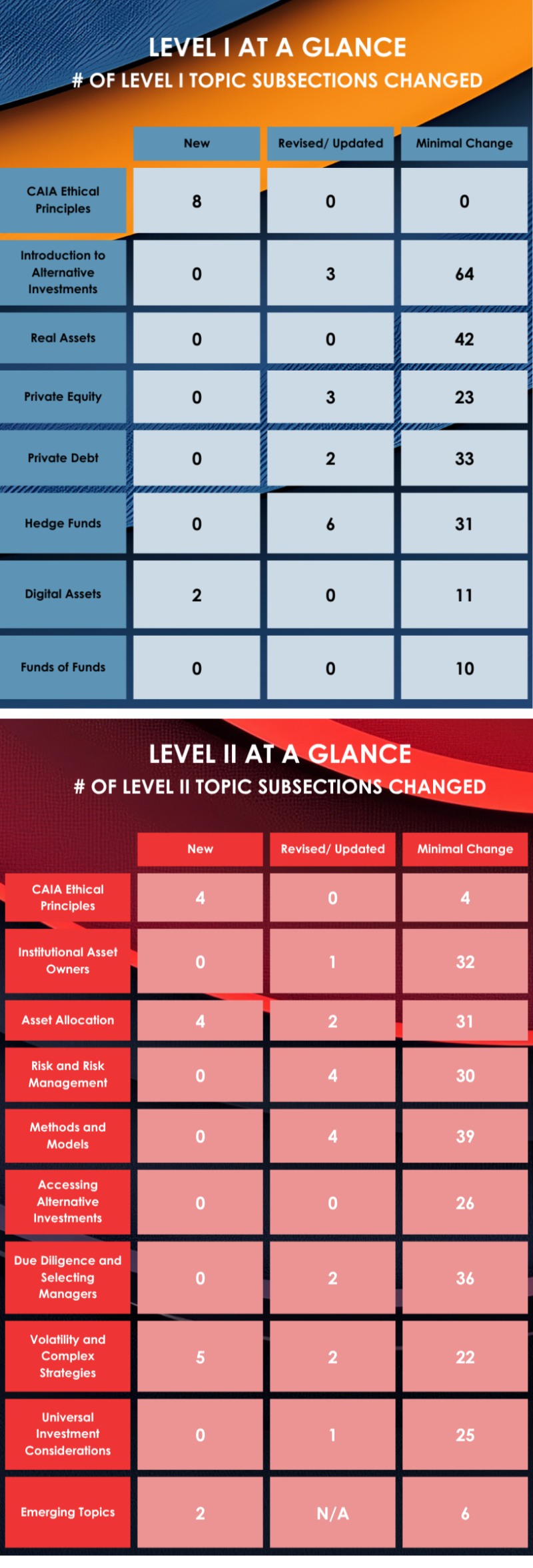
The curriculum is updated annually, with revisions resulting in roughly 10–20% change in exam content. This revision process ensures the curriculum reflects the most relevant and up-to-date industry analysis, tools, and best practices.
The CAIA Association releases the revised curriculum at the start of the registration period in October for the following year. This updated curriculum then applies to the two exam cycles in that calendar year. For example, updated curriculum for 2026 exams is released in October 2025 and should be studied for the March 2026 exam and the September 2026 exam.
It is important to note that exams are based exclusively on the curriculum
associated with that exam year. Use of prior editions is not recommended.
Next is here. An Evolution in Learning
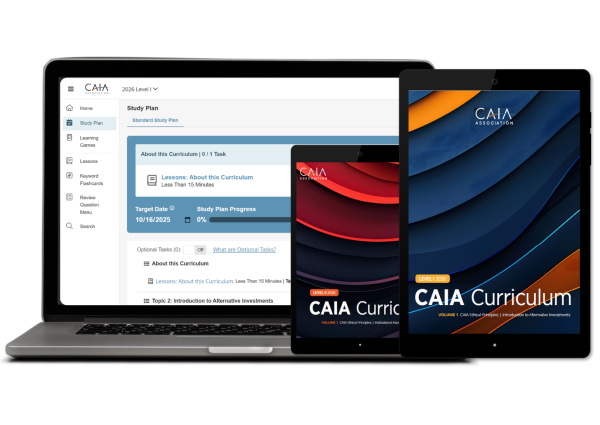
Beyond a singular focus on individual investment strategies, today’s investment professionals must wield a holistic proficiency encompassing an array of disciplines. From portfolio construction and thematic investing trends to geopolitical shifts, regulatory intricacies, and technological innovations, the modern investment landscape necessitates the multi-dimensional approach found within the CAIA curriculum.
For Level I, the curriculum takes a bottom-up approach to the alternative investments industry. The readings offer detailed insights into the variety of institutional-quality strategies spanning the alternatives universe. Upon completing Level I, Candidates should have working knowledge of the relevant strategies available for investment, along with the basic tools to evaluate them.
The Level II curriculum takes a top-down approach and provides Candidates with the skills and tools to conduct due diligence, monitor investments, and appropriately construct an investment portfolio. In addition, the Level II curriculum contains Emerging Topic readings; articles written by academics and practitioners designed to further inform and provoke the Candidate’s investment management process.
For additional details about the Level I and Level II curriculum - including learning objectives and keywords to support your studies, please review the Level appropriate Curriculum Companion.
What's new?
Each year, the CAIA Curriculum is a snapshot of the skills and judgment that set the standard in alternative investments. The 2026 edition marks a sharper inflection point: ethics codified in a new global standard, asset classes once considered peripheral now taking center stage, and tools that reflect the methods and approaches that Candidates will use in professional roles within the context of today’s market realities.
A New Ethical Standard
In 2025, the CAIA Association introduced the CAIA Ethical Principles—a modern, practical framework for integrity in investment management. In 2026, these principles are fully integrated into both Level I and Level II curriculum.
This isn’t ethics as an afterthought. It’s ethics as a professional advantage—guiding decisions in high-stakes, high-complexity markets where trust, transparency, and performance are inseparable.
Level I
The 2026 Level I Curriculum delivers a foundation designed for real-world portfolios. This year’s updates emphasize what’s now essential knowledge—not just historical context.
New and revised content includes:
- Growth Equity: Expanded content reflects how deal structures, valuations, and portfolio roles have evolved.
- Digital Assets (Foundations): Added to our coverage of this topic through readings on crypto in institutional portfolios, with focus on asset roles, risk frameworks, and allocation philosophies.
- Fees & Expenses: Streamlined but comprehensive updates to clarify cost structures and their impact on net performance.
- Curriculum optimization: Seven outdated readings retired to keep focus on relevant, high-impact content.
Level II
Level II is designed for Candidates stepping into roles that require judgment, oversight, and leadership. In 2026, the curriculum gets sharper and more aligned with market realities.
Major updates include:
- Rebalancing Strategies: Deep dives into when, why, and how to rebalance in portfolios that include illiquid and alternative assets.
- Digital Assets (Advanced): New to the core Level II curriculum, reflecting their growing role in sophisticated investment strategies, readings focus on cryptocurrency trading and investing, with a detailed examination of the risks unique to crypto markets.
- Emerging Topics: Now includes two timely papers that bridge academic rigor with practical application.
- Study 1: Historical performance of private market funds - how size, specialization, and fund sequencing impact returns.
- Study 2: Case studies on pension plans using direct investments to enhance returns including detailed insights into strategy and execution.