
 Search
 Close
SearchClose
Close
SearchClose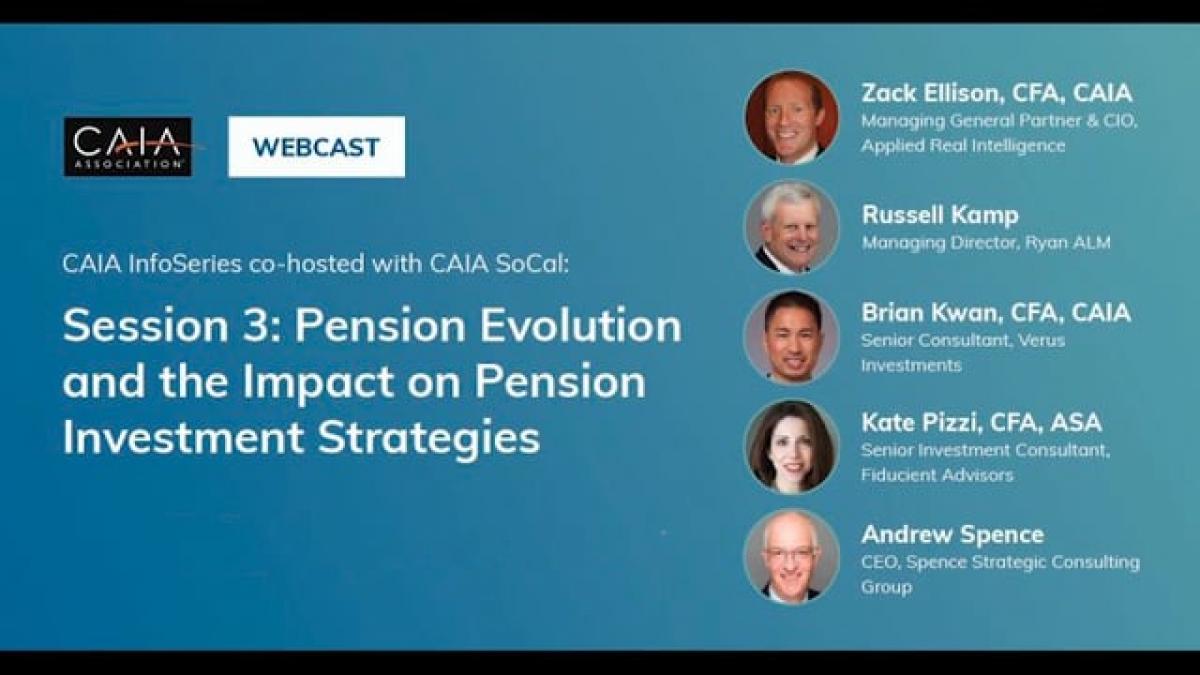
Leading pension investment experts share a candid discussion on the investment repercussions of the recently passed Butch Lewis Emergency Pension Plan Relief Act of 2021 and the American Rescue Plan Act of 2021 (ARPA). The panelists also discuss the financial impact of the Acts on multi-employer pension plans as well as provide investment solutions to help all pensions more effectively achieve their investment targets and reduce funding deficits.
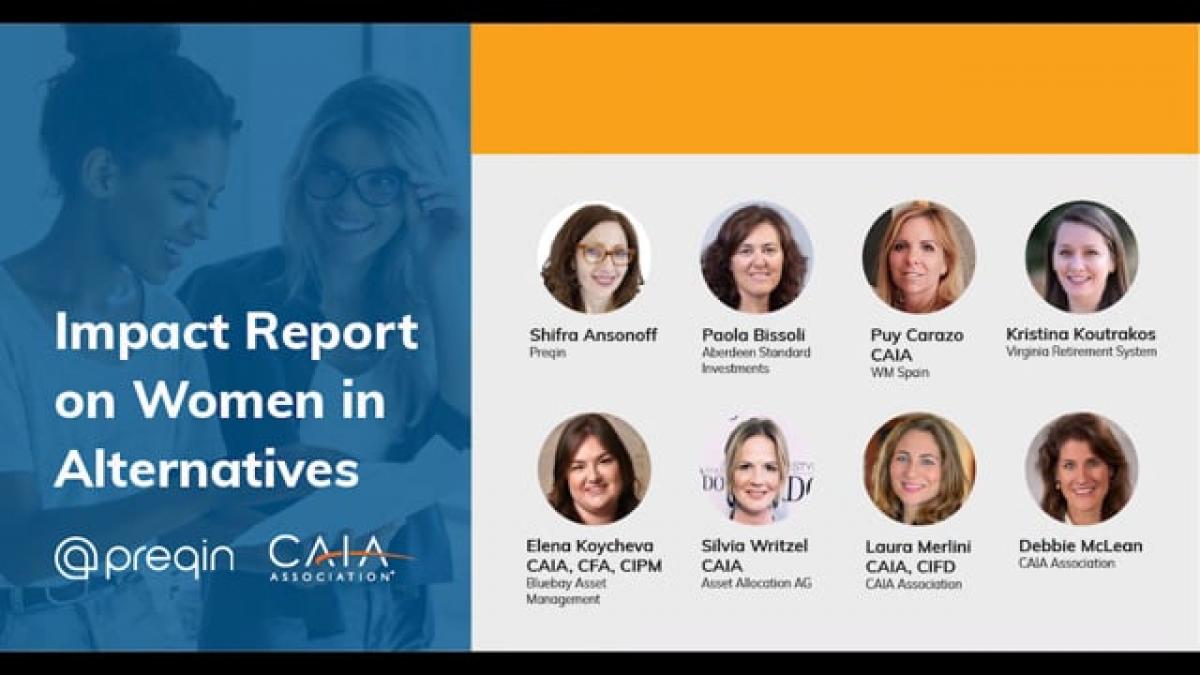
In a follow-up to Preqin’s 2020 study on Women in Alternative Assets, findings show where the biggest advances in female representation are being made, and where there is room for more proactive effort. The data in this report has been sourced from Preqin’s database of more than 200,000 industry professionals to highlight the trends in the workforces of active fund managers and investors. Listen in for a discussion on the highlights from this report and Preqin’s overview of the alternative investments landscape.

Tokenization could help to democratize multiple asset classes by providing accessibility to more investors, while enabling asset managers to innovate by creating alternative assets tokens, thereby furthering the expansion of their potential product mix. Yet, the applications of the technology are still in the early stages. Join Chapter co-hosts CAIA Houston, San Francisco, and our Rocky Mountain pre-Chapter, for a panel discussion on some of the investment applications and technological considerations of tokenized assets.
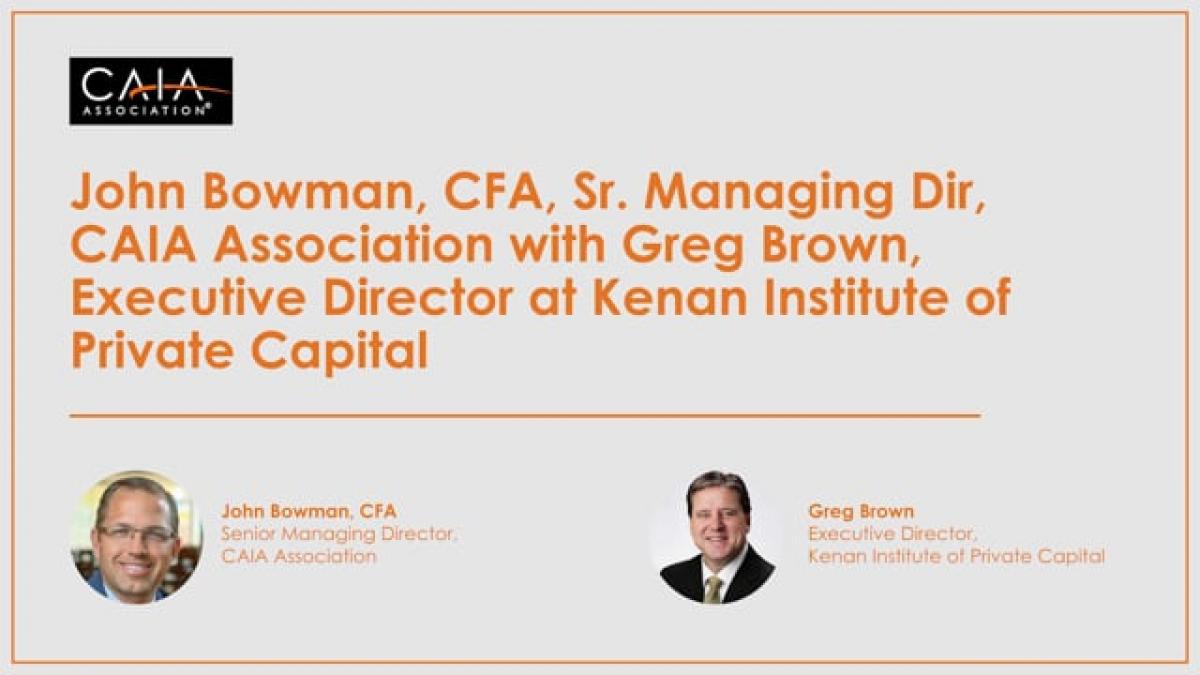
On average, venture capital and buyout funds experience a performance falloff after seven to eight years, while the cross-sectional dispersion among them increases. In this brief conversation, John Bowman and Greg Brown discuss Brown's article “The Evolution of Private Equity Fund Value” as it appeared in the spring edition of CAIA's official Member publication The Journal of Alternative Investments. Access the full article here (a CAIA exclusive).
Interested in more on this critical topic? Join this upcoming webcast and keep an eye on the CAIA blog
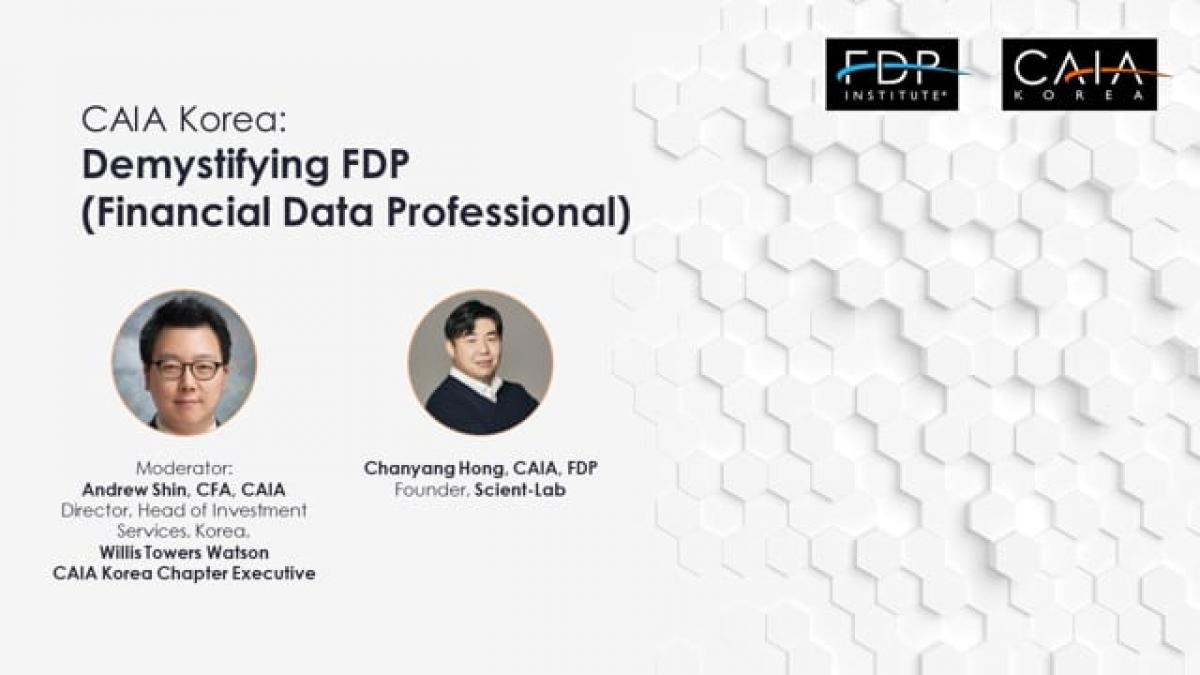
There's never been a more crucial time to stay relevant and ahead of the curve. Join our CAIA Korea Financial Data Professional (FDP) webinar to understand the growing roles of big data, data mining, workflow automation and machine learning in investment decisions and learn more about our FDP program.
This webinar was conducted in Korean.

Ronan Crosson, CFA of Eagle Alpha and Aaron Filbeck, CFA, CAIA, CIPM, FDP of CAIA Association discuss the steps towards integrating alternative data sets into private equity analysis. In this short video, they discuss issues such as culture from the top of organizations, building a robust team, and just getting started. For more, read the first of a series of posts Ronan will be contributing to the CAIA blog here.

The investment industry speaks about the “60/40” portfolio so much that it is largely assumed to be the “correct” portfolio for a large number of investors. However, it describes modern asset allocation about as well as Happy Days did the 1950s or Friends the 1990s. (Great shows both – but a bit detached from the real world.) To be fair, the 60/40 portfolio can be a useful starting point to illustrate the pros and cons of additional asset classes and/or alternate portfolio construction approaches. Furthermore, it demonstrates some of the critical foundations of modern asset allocation: stocks provide a high long-term return expectation, while bonds provide diversification through negative correlation and lower volatility. Today, the asset and wealth management industry largely agrees that the 60/40 portfolio will not deliver the same outcome as it has in the past. This is forcing investors of all kinds to consider new and/or larger allocations to alternative asset classes and strategies, but that leads to a key question: if not 60/40, then what?

There has been tremendous activity in the SPAC market in 2020 and 2021, a time when more than half of the IPO activity has been attributable to the issuance of new SPACs. CAIA’s Keith Black, PhD, CAIA, CFA, FDP, Managing Director, Content Strategy, and Aaron Filbeck, CFA, CAIA, CIPM, FDP, Director, Global Content Development, discuss Keith’s recent blog post on SPACs, offering insight into their how arbitrageurs, shareholders, and private companies might consider them. Listen to their conversation and read more on the blog here.

New research from CAIA Association suggests that investors place higher emphasis on qualitative factors when performing due diligence on private capital managers, a stark contrast to the quantitative factors typically emphasized with hedge funds and traditional investment managers. This panel answers the following questions: What are the most important questions to ask during the manager research process? What are the most important qualitative factors to consider? What are some of the biggest differences between performing investment and operational due diligence on liquid strategies vs. illiquid strategies?

African private markets probably present the premier opportunity for investing to contribute to the UN's SDGs while also creating attractive financial returns. The potential for bringing solutions for the bottom billion, leveraging Africa's mobile infrastructure, is vast and being used by a lively and creative venture community with increasing numbers of later stage opportunities and the emergence of unicorns such as Zipline and Flutterwave. At the same time, larger buyout and growth equity opportunities in sectors such as agribusiness and related logistics, distribution, and financial services companies are creating the potential for delivering impact at scale. Impact potential includes improvements in ESG, job creation, waste reduction, and the benefits of their products, such as fertilizers and other agricultural inputs.
©2026 Chartered Alternative Investment Analyst Association®